Monday, January 15, 2007

Not a “best of 2006” list (barely even a list)

Really just a few movies I’ve seen in the past few weeks. Forgive me, Justin-- films.

Now, Voyager (1942)
Every so often I get on a Bette Davis kick where I first indulge in a little self-pity that I can’t be Bette and then content myself with watching her sly, soft-filter face and grand, emotional monologues. I especially love 1950’s All About Eve, but this movie’s also a good place to start. Davis plays Charlotte, a young woman who evolves from a frumpy daughter to a svelte woman of the world. In one characteristic scene that is definitely not meant be funny, Charlotte’s new beau, unaware that she was once an ugly duckling, studies her family photograph. “Say!” he frowns. “Who's the fat lady with the heavy brow?” “That lady,” gasps Charlotte, spinning away tearfully, "is me!”
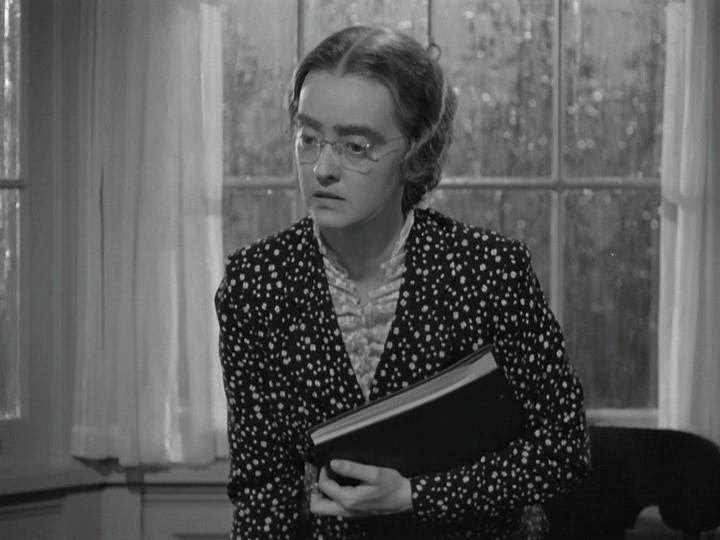

The old Charlotte, apparently hideous

Volver, Pedro Almodóvar (2006)
Speaking of drama, nobody does more to whip the passions of women’s lives into such moving, operatic proportions. If the emotions passing across his characters’ faces could be harnessed, they could power a small continent-- and everyone on the continent would be weeping, laughing, and wearing vivid, low-cut blouses.

Little Children, Todd Field (2006)
I almost hesitate to recommend this film, because I don't much like some of the plot, but it’s an improvement on Tom Perrota’s decent novel (how often can you say this about a film?), and the acting and cinematography are extraordinary. Kate Winslet brings her usual, believable beauty, and when the camera pans quietly over a packed community pool and an empty suburban backyard you feel like you're looking through the eyes of a single riveted observer, rather than a cool, omniscient lens. A few minutes in, it was clear that the subject of the story (suburban malaise) would be treated without irony. A big relief.

More generally: We just got a subscription to Wolphin. The first DVD to arrive is, well, a mixed bag: A few excellent shorts, a couple of oddballs and more than one genuine dud. But if you’re interested in checking out short films (oh, these most definitely are films) that nobody one else has seen, I'd say it's well worth subscribing. Either way, be sure to watch the short clip on the website from A Stranger in Her Own City, an excellent documentary about a seventh-grade girl from Yemen who refuses to wear a veil.

So... I still have a little time before the new semester descends, avalanche-style. I want to squeaze in a few more Netflix and theatre trips, so pass along your recommendations! Then it's back to books.

Friday, January 12, 2007

Casper & Ferdinand

Alas, this is not the name of a recent Merchant Ivory release, nor of a storybook ghost and his Portuguese explorer friend. No, these are the names of two small boys who happened to be attending the “Story Hour” at a café on the Upper East Side recently. Coincidentally, it was the same day and the same café where I happened to be enjoying a cup of coffee. I had arrived at the café around 9:45, having put in a long walk looking for the place, and had just sat down with my steaming coffee and opened my laptop. Cold Play was crooning inoffensively on the speakers, and all around gentle students and freelancers were softly clicking away, savoring the free wi-fi.

Little did I know that in mere minutes Story Hour would begin (apparently announced to the entire Metropolitan area at a frequency that only parents and small children can pick up), and New York’s Most Fertile (NYMF) and their bundled offspring would be charging the door. Around 10:15, the café staff went into gear, moving furniture, tossing down colorful blankets, and pouring apple juice into what looked like hundreds of plastic medicine cups. Around 10:30 the front door jangled: an imposing woman with curly hair and an ear-popping voice (The Story-teller, I would learn) strode in, issuing commands: “Let’s have that sofa a little to the left! Where’s my marionette?” Ten minutes later the place was brimming with mothers, nannies, massive strollers and fat toddlers barreling around like drunken sailors. I debated whether to stick it out or run (factors: my coffee was still hot and served in such a nice glass mug, and I had overheard someone said the whole thing would be over in an hour).

Amid my indecision, café employees were shepherding the children and their caretakers into a line, so that the lucky pre-schoolers could receive juice and nametags, and enjoy pointless conversation with the employee distributing said provisions (“And how was your New Year’s Eve, Olaf?” Shuffle, shuffle of snowboots. “I don't know!!”) The front of the line was, of course, inches from where I sat, ruefully staring at my computer screen. And if you’re wondering if I’ve forgotten about the two boys in the title of this post, well here they are: smartly dressed in corduroys, the identical twins of a tall woman in a fur coat. They stepped to the front of the line, and pen poised, the employee asked their names. Their mother placed a bejeweled, proprietary hand atop one of their heads, and trilled--so loudly that I’m sure people in New Jersey could hear-- “Casper and Ferdinand!”

I keep mentally reliving this moment (my brain has important work to do, I tell you), and each time her response is more embellished. Now I’m seeing her in a tiara, tossing back her head and replying, “Why, these lads?! They are none other than Caspah and Fah-dinand!” By tomorrow, she'll probably have some guys with horns on hand to toot as she says their names. And soon red carpets and waving flags will fill the café and all of us humble café patrons will be barred from the free wi-fi and the tempting baked goods until we pay our homage to the young princes... Casper and Ferdinand.

“Alrighty,” says the employee, pen in hand. “Is that Casper with a “K”?

"No," she sniffed. "A 'C'."

Thursday, January 04, 2007

Carmelized Endive & Swordfish

Dinner's made, eaten, and now I just have to say that this recipe is delicious. The fish is tasty enough, but the carmelized endive is buttery, sweet, and melts in your mouth. I can't believe it's taken me all these years to discover it.
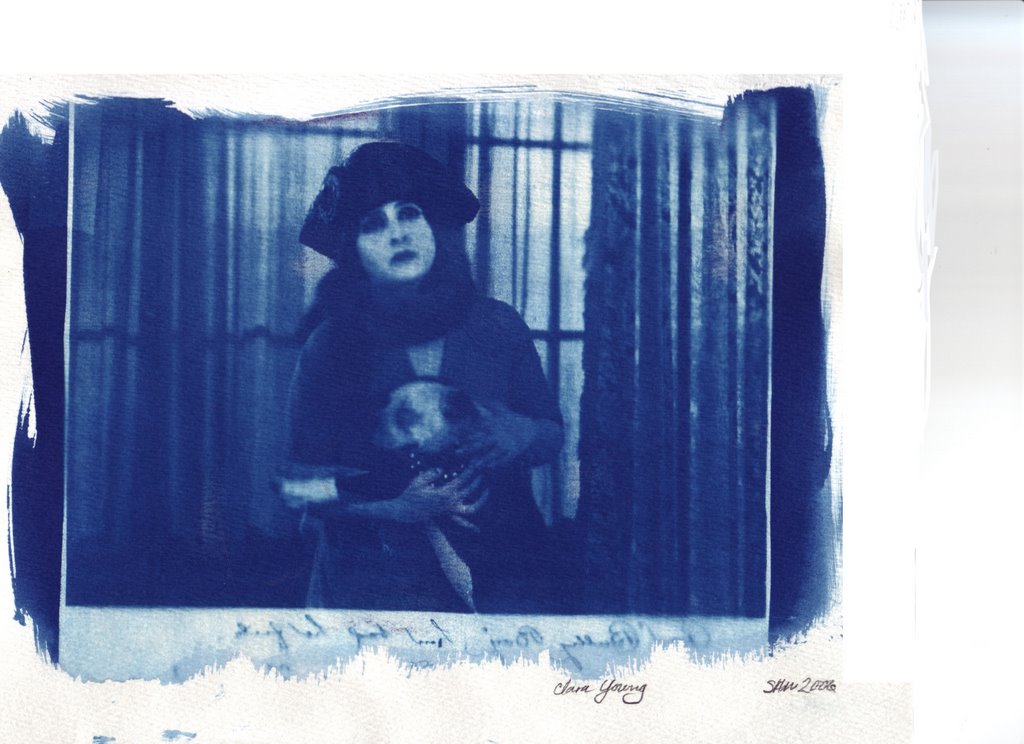
Kind of Blue


This method of photo processing may look otherwordly, but Steph claims that cyanotypes are actually easy to make. In fact, you could whip one up right now, if only you had a few vials of green ferric ammonium citrate (insert evil scientist laugh) and some other goodies lying around. What you’re looking at is an "excerpted" version of one of Steph's very lovely pieces (Sorry, Ste. One day I'll learn how to fit large pages into my scanner. Baby steps, baby steps).

Tuesday, January 02, 2007

Chair Love

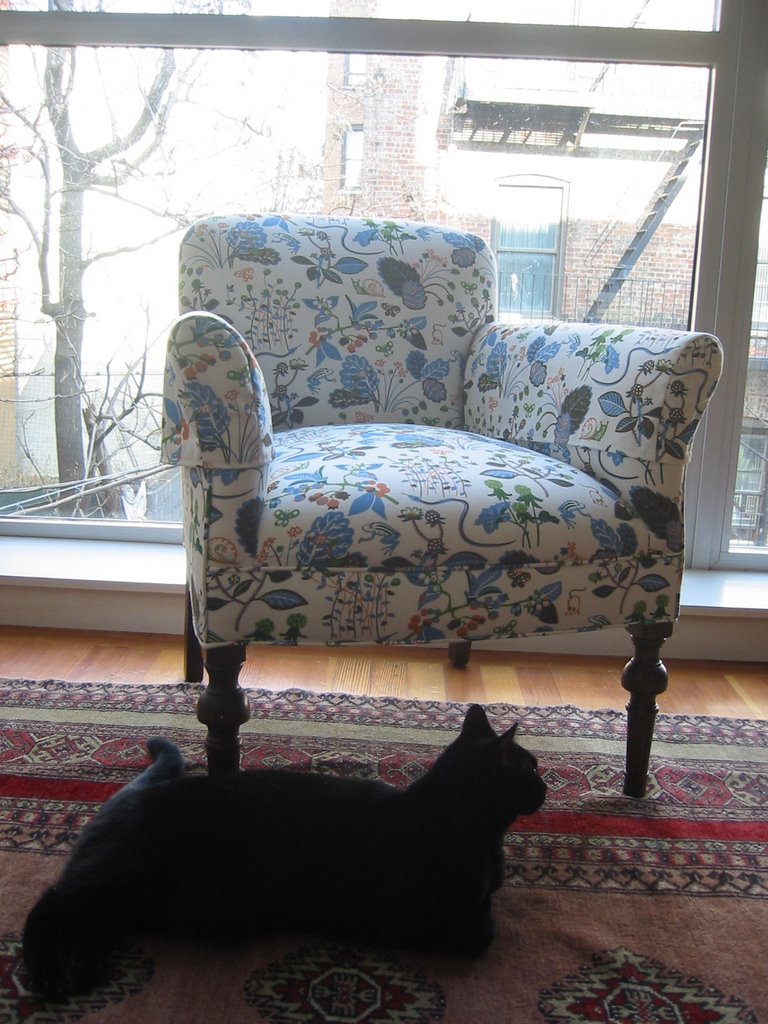
Voila a Christmas gift—an old chair reupholstered!


This reading chair originally belonged to my great grandmother and was a wedding gift from my parents. It came to us in tattered blue fabric with bits of foam popping out here and there, and spent the last five years stored in a Michigan attic, lodged between boxes of Christmas ornaments and old cans of paint. A few months ago, hushed negotiations started behind my back: Justin contacted his friend Tim (who runs a textile design company with his wife) about selecting a new fabric. Then Just’s dad took the chair in to a Michigan reupholsterer, who—I found out later—was thrilled to work with Tim's merry fabric, since his usual orders involve variations on beige and tan.

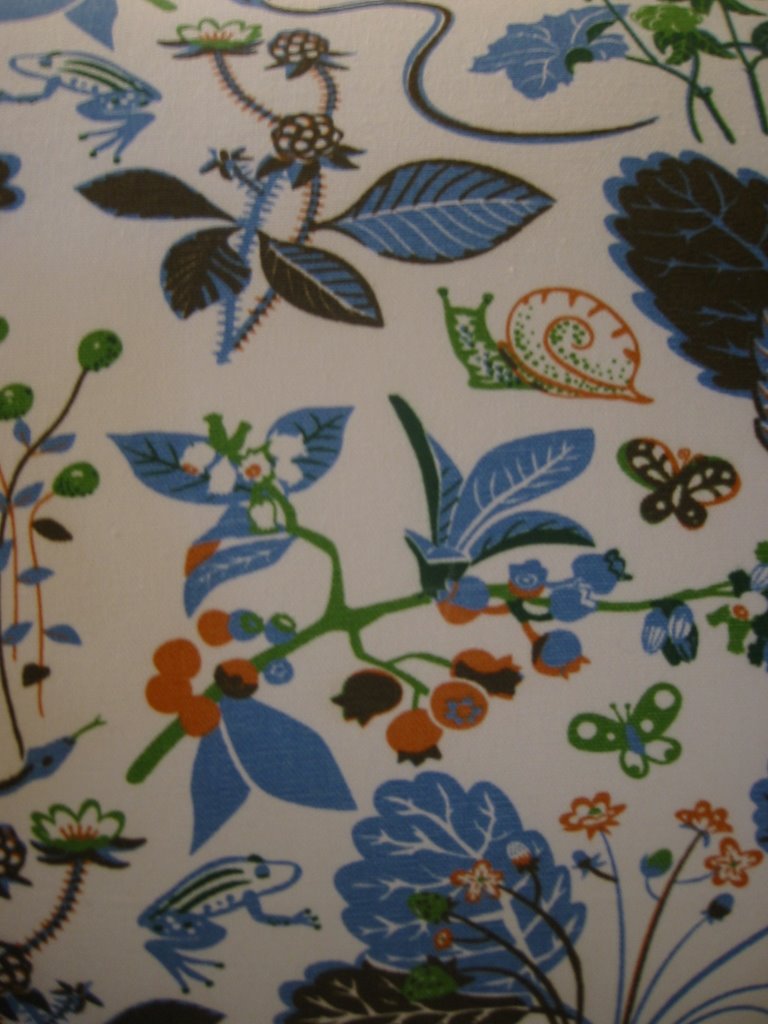
This pattern is called “Feasting at the Berry Bush,” and reminds me of modern Swedish cave markings + the Garden of Eden (i.e. Sweden-Eden). If you go here and click on the new stuff for spring, you'll see a whole lot of products made with the same fabric.

With the new upholstery in place, the chair awaited Christmas morning (Justin’s whole family was in on the secret). After the blanket that covered it was whisked away, and I had exclaimed my happiness forty or fifty times, Just’s dad helped him carefully crate and pack it for the trip to NYC. Then we hauled the box into a Kinkos/Fed Ex store, where we heaved it high up into the air and down onto a comically miniscule scale better suited to weighing tea cups than 90 lb crates. Miraculously, it made it to our door in the Bronx two days later.

Ever since it arrived, I’ve been standing back and gazing at it, testing it out: it looks cute with cats on it and without. It doesn’t match the rug but that’s okay. Can I read Dostoevsky in a chair like this?

I also keep thinking about one of the papers I wrote last semester. It dealt with a couple of 19th century women writers, who, I pointed out, tend to fetishize the domestic space. By fetishize, I meant something akin to Marx's definition, that to fetishize an object is to value it beyond its utility. In Uncle Tom’s Cabin, for instance, Stowe spends a breathless passage describing a character’s beloved old rocking chair, and how it is so wise that, my oh my, if it could talk, the stories it would tell!

While laying out my little critique of this kind of unhealthy chair-loving, I had no idea I'd soon be the owner of a wonderful old chair of my own. I was aware, however, of how much I (my unacademic side) love household objects, how much I obsess over them. I remember my great grandmother’s sugar bowl into which we dipped fresh rhubarb from her garden (she was the chair’s original owner!). I forget events and conversations but I have a good memory for trinkets and collections: glass frogs, china figurines, the sorts of things that clutter shelves and make dusting pointless. And bigger things, too: a wooden table whose sharp edges grew rounded by multiple coats of paint, a gold quilt I found at a garage sale when I was in college that I finally had to throw out after the cat peed on it one too many times.

These things sometimes seem more real to me than anything else, and I don't think I'm alone in this feeling. Even the weird popularity of chotzche and kitsch a few years ago—all those snow globes, religious candles and similar clutter—seems less a critique of sentimentalism than an embarrassed confirmation of our need to understand ourselves through accumulated stuff.

I say we need a new vocabulary to talk about our relationship to things. If I were ten and announced that I loved my chair, another kid my age would instantly holler, “Well, why don’t you marry it!” See? Back then we were already trying to figure out what it means to be attached to stuff.

Anyway, I am smitten with this chair, and hope that's not the sign of a character flaw or a frail constitution.

It's officially my new most favorite thing. What's yours?

Wednesday, November 29, 2006

Ever since I first read him in high school, I haven't been able to generate much passion for grumpy old Stephen Crane.

Case in point:

A man said to the universe:
"Sir, I exist!"
"However," replied the universe,
"The fact has not created in me
A sense of obligation." - Crane

How come the universe has to be so pedantic? I prefer mine warm and breezy, with a slight chance of showers.

It occurs to me that you could rewrite the above poem, substituting the word "google" for "the universe."

Or the words "the Bronx."

Or the words, "3:15 pm bus crowded with people on their cell phones and yelling, hormonal teenagers recently released from captivity."

Yep, I think that pretty much fits.

Wednesday, November 08, 2006

Libary Thrills

In the farthest reaches of the New York Public Library is a little room called the "Special Collections Division." I went there today, all the while thinking of it as the “Special Victims Unit.” It’s where the exciting books live, sheltered and climate controlled, under the care of serious, winged librarians whose footfall echoes not.

I needed a book there, and I had to go through yards of paperwork to get it. As I was signing forms, I asked one of the librarians why this particular book (essays by a 19th century New York City journalist) was held under lock and key. He explained that it was part of a private collection of one Mr. George Arants, a successful tobacco executive, who spent most of his adult life amassing books, magazines and advertisements dealing with tobacco. The man apparently loved smoking.

The journalist I was researching (one Fanny Fern) was not, to my knowledge, interested in tobacco, so I wondered what I’d expect to find in this book of hers. Finally, the paperwork was finished, and after much fuss (a librarian carried the volume out on a foam tray!) I opened it and flipped around until, sure enough, I found a short essay titled "Tobacco."

The opening was, well, not subtle: “I despise tobacco!”

I read on: “Men, I deny you the right to smell bad in my presence! I deny you the right to poison our parlors with noxious smoke! I categorically deny it!”

What was this rant doing in the collection of a tobacco mogul? Was he worried that Fanny Fern’s little column would hurt business? Was he putting one of the last remaining copies of the book behind lock and key so that future generations might avoid learning about what a nasty habit smoking is?

A very minor historical mystery, and one probably with a very simple explanation. But guessing's more fun.

Tuesday, October 31, 2006

Quiz Nachos

In what was perhaps the most loserly year of my life, seventh grade, I decided to keep a journal, but not an ordinary one full of thoughts and feelings and poems and stories. I already had one of those. I needed a special journal that would be entirely objective-- a bare-bones record of the days’ events, sans commentary. This idea struck me after my dad gave me an extra pocket appointment planner from his work. Never having seen such a creation, I was enamored of its stern, daily columns with spaces for every hour of the day-- perfect for a woman with nary an appointment but a real desire to write stuff down. Every so often I run across one of those old planners as I’m organizing and expect to find useful insights into my 12-year-old mind. I found one recently and opened it at random to November 12, 1989. I'm still puzzling over that day's entry, a cryptic account that I'll reproduce here in full, just as it appears:

Quiz nachos!!!


Around that time, I also received as a gift a real diary with a bluish soft-filter photo of a ballerina and a tiny combination lock requiring its owner (me!) to spin through the letters of the alphabet and spell out a secret code. A page of directions ordered me to memorize the secret word and dispose of this instruction sheet immediately. The secret word was “Mum.” That was easy to remember. Mum, after all, was what I needed to keep, as well as being the main reason for the lock.

Over the years I’ve had an assortment of journals. But, more and more, I’m curious about how other people look at the process of writing stuff down--not only what they record in their journals, but when, how and where they choose to write.

Grab Bag 'O Facts:
1. A woman I know writes in her journal the instant she wakes up, so that her entries get tangled up with her dreams.
2. Pepys wrote everyday solid for ten years.
3. Some extremely creative men I know don’t keep journals (I live with one).
4. Some people claim they can’t think when writing on lined paper.
5. Yesterday in class I sat next to a very quiet girl who took notes on our Faulkner lecture in beautiful shorthand.
6. Pepys wrote shorthand in his diaries.
7. Virginia Woolf, inexplicably, referred to herself in the third person as “Miss Jan” in her childhood notebooks.

One last fact: When Theodore Roethke died he left behind 300 notebooks. That’s 300 journals stuffed with scribbled ideas, entries, poetry fragments and aphorisms drawn from his work as a poet and a teacher. How much footage is that in shelf space? Fortunately, all that writing has been edited down into one slim, spectacular volume of poetry and notes entitled Straw for the Fire.

Here are some quotes to tide you over until you can get a copy:


I love how a skeleton looks.

Oh poor words, bear with me.

I stay away from death by turning toward her face.

I am beside myself, sitting by you.

Therefore, I shall get on with the daily business of revelation.

I broke my tongue on God.

Live in perpetual great astonishment.

God, alone, is poor.

We cry against critics: because it’s so important they be better.

May my silences become more accurate.

The splendid irrationality of a peacock’s tail.

Teaching: one of the few professions that permit love.

I trust all joy.

Every sentence a cast into the dark.

Reject nothing, but re-order all.

God give me, not grace, but energy enough to move around!

Sunday, October 08, 2006


Float like a Butterfly

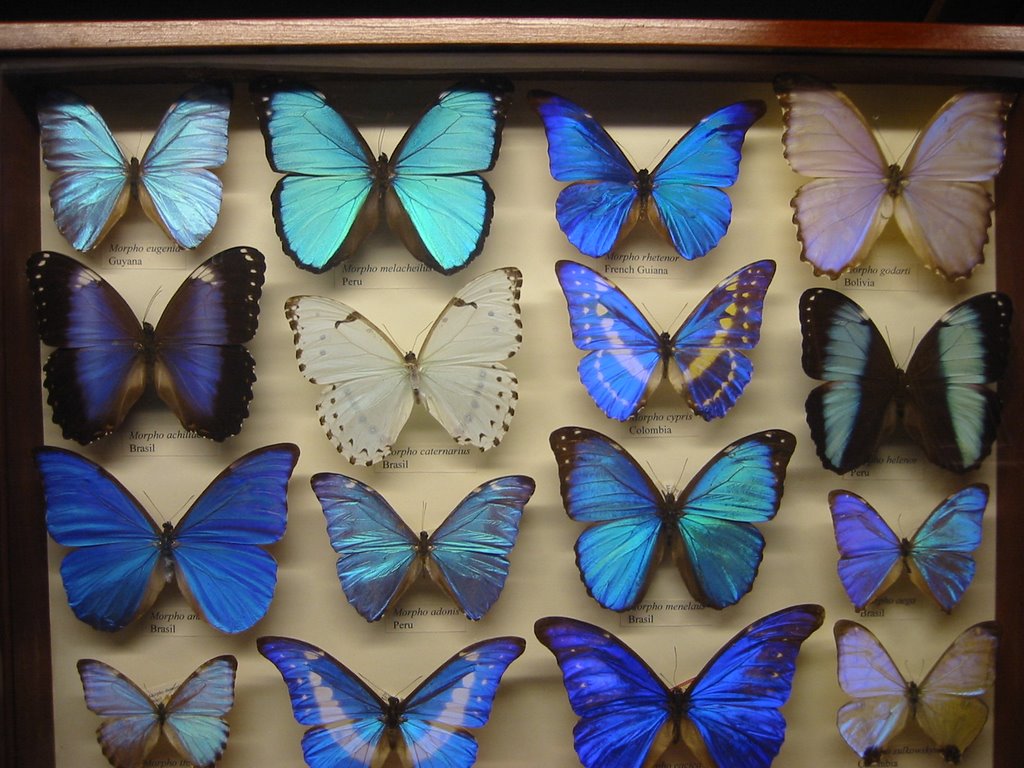
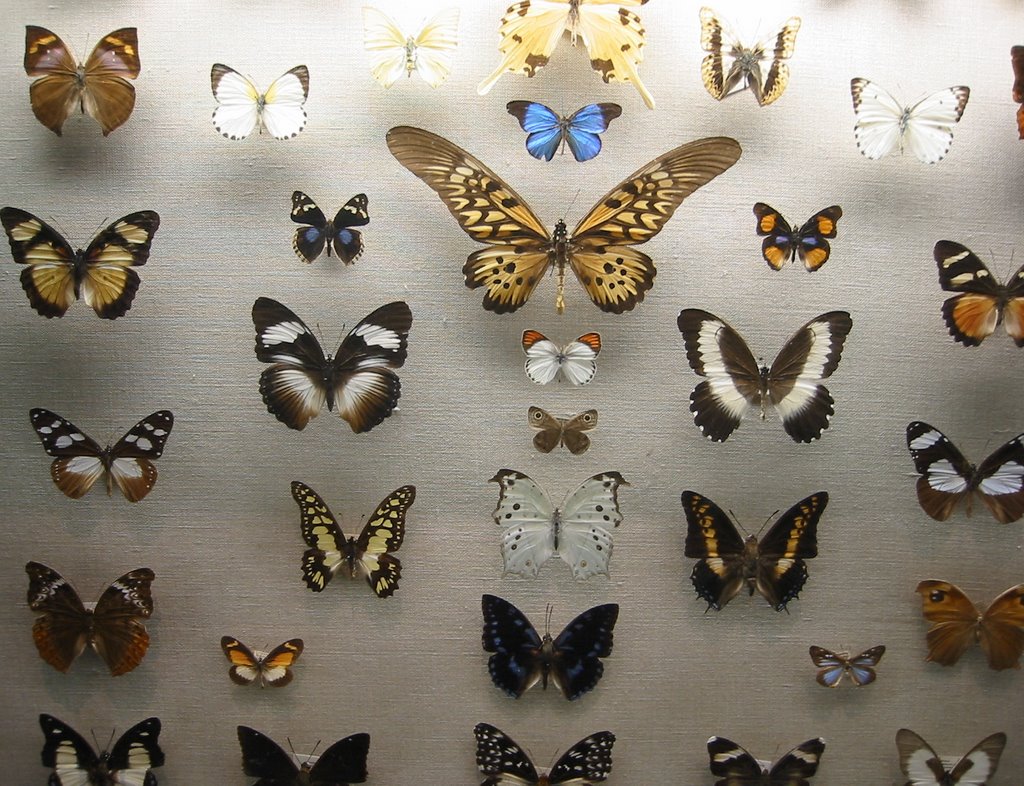
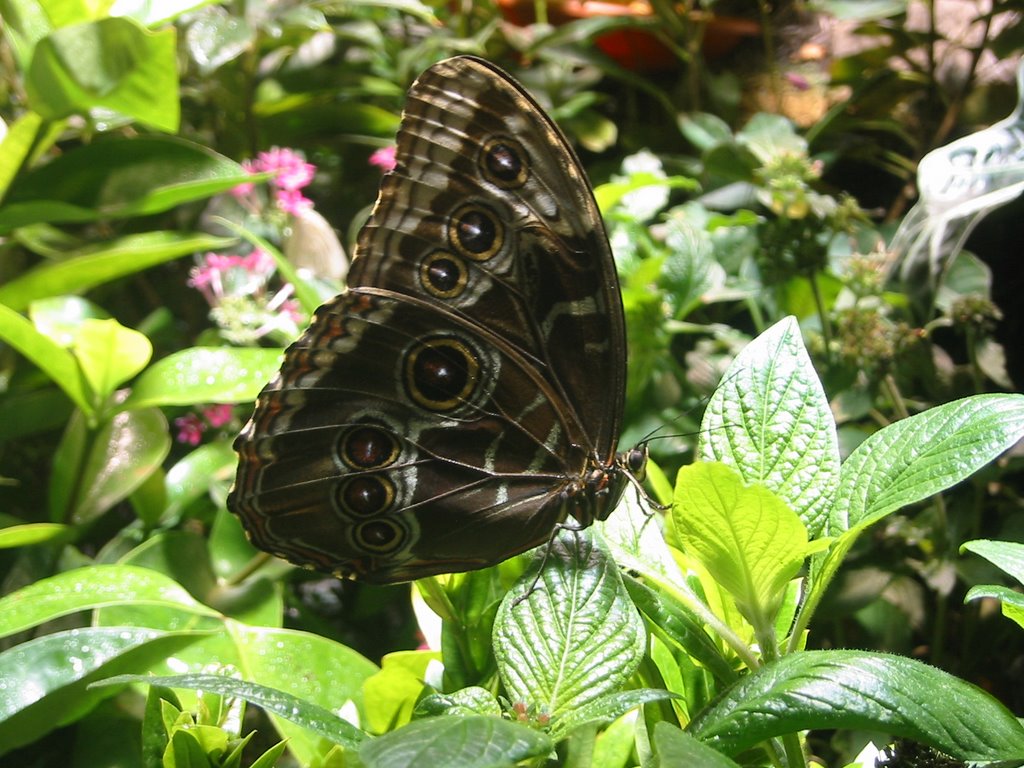
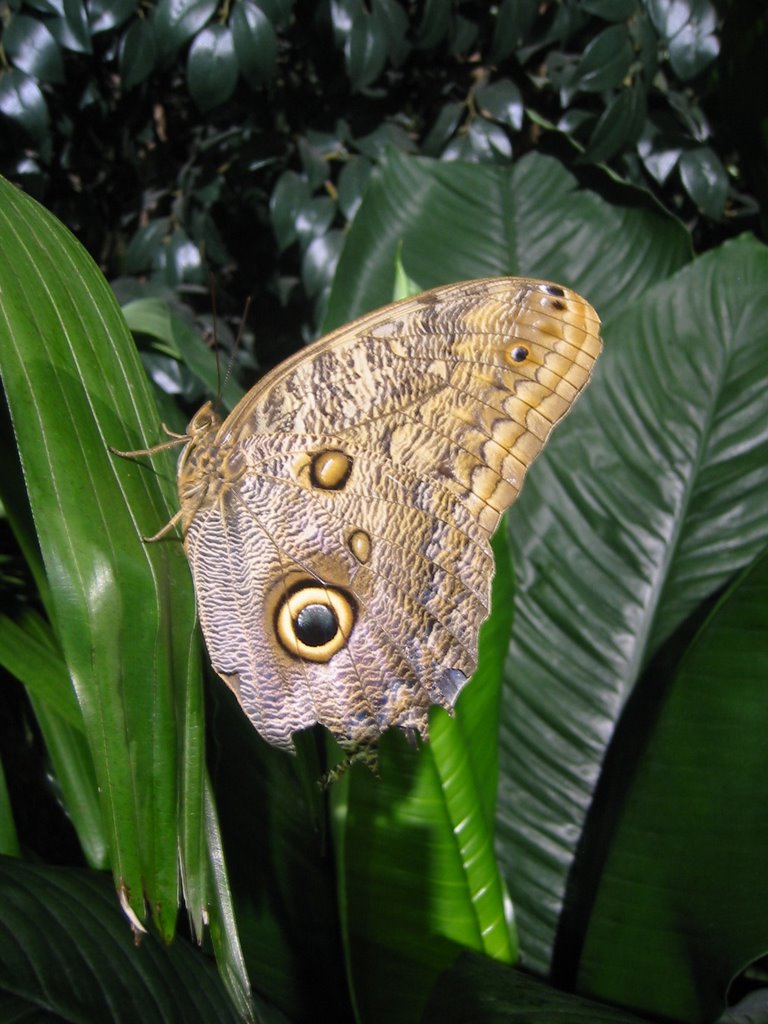
My classmate’s husband works at the Museum of Natural History, and she was generous enough to ask him to rustle up some free passes to the current butterfly exhibit for Just and me. Maybe because it was such a picture-perfect fall day, or because I had just come from annotating a 12-page John Ashbery poem, but the butterflies (sealed in display cases and fluttering in their humid glass room) seemed like the most deliriously pretty things on Earth. Two of them, brown with circular markings, made me want to drop everything and take up a career in textile design.


Ain't they purdy? Sorry, by the way, about the infrequent posts lately. I'm trying to make up in photos what I don't have time to produce in words. I’m also working really hard at the moment to impose some kind of structure on my week: school time (reading, tutoring, classes, commuting, and attending the occasional lecture or conference) and non-school time (everything else). So far, it’s working—well, sort of. I’ve gotten into a fairly comfortable 6:30 a.m. tea-and-books routine, and I try to make some time for dinner (Trader Joe's frozen tomales and shrimp must have been invented by an enterprising grad student) and the occasional non-school book; right now I'm reading Cold Comfort Farm, an enormously hilarious novel that you should buy this instant if you don't already own it. In terms of sheer funniness it ranks up there with A Confederacy of Dunces.


Saturday, September 30, 2006

Sleepy Hollow

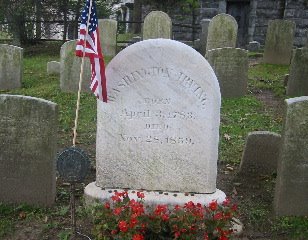
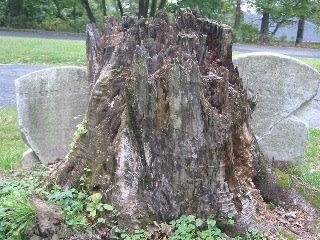
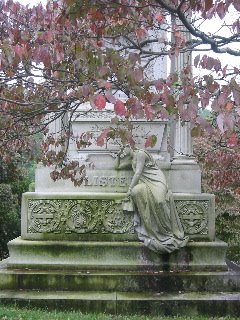
Last weekend we rented a car and drove upstate, where we happened upon the village of Sleepy Hollow and its churchyard cemetery. A sign out front promised a Halloween reading of the "Legend," and inside the cemetery, we found Washington Irving's tombstone, where I risked my clean criminal record leaping over a low, locked gate to snap a picture. Oh, and just so you know, I tried to persuade the headless horseman to pose, but he thinks he's unphotogenic.

On a way more serious note, I was really moved by the cemetery. Some of the 18th and 19th century graves are passionate and terrible (in the old King James sense of the word) in a way that stoic, contemporary stones just can't touch.


Saturday, September 23, 2006

Retail Speak

Doctors and lawyers have their own professional jargons, and it seems to me that retail store employees do as well. When they want you to step forward to the register, they rarely just say “next!” Instead they suck in a lung-full of air and call out, “Will the subsequent guest please make their way directly forward to register six under the green sign on the far right, please!” The sheer number of syllables is supposed to sound polite and professional, but instead it just feels scary. You’re never sure if you’re the one being addressed. “Am I subsequent?” you wonder. And when you finally make it to the register, the cashier barks out cryptic questions and commands: “Who was helping you today?” “Don’t you know that if you buy five pairs of socks, you get the sixth free?” “Credit or debit?” “Press the green button!”

All of this is bad enough, but yesterday I was innocently buying catfood and had a brief exchange with my young, female Petco cashier that, I think, takes the prize for weirdness. I can’t make any sense of it, but maybe you can.

Cashier: Will the following guest please step down!
Jane [placing cans of catfood on the counter]: Hello.
Cashier [smiling]: Hi, how are you today?
Jane: Fine, thanks.
Cashier: Your total comes to $9.89. Do you have a Petco card?
Jane: Well, not yet...
Cashier: Okay, let me just give you this application form. You can fill it out and ret—
Jane: Well, I actually have that form at home. I just haven’t filled it out yet. I’ll bring it in next time.
Cashier: [smiling and shaking her head] I’m gonna strangle you! You better bring it next time!
Jane: [gathering bags hurriedly] Ha, ha! Right!

-----
Help! Is this something people actually say to each other? Am I too old and uncool to get it?

Tuesday, September 19, 2006


Someday My Prince (and other fables)

Laura Anne is an eleven-year-old girl from the seaside English town of Siddick who falls in love again and again. But the boys she goes for are almost incidental to this story. After all, they’re just dumb boys, and most several inches shorter than her. It’s not them she cares about. (Well, okay, a little.) But mostly she’s in love with being in love. That’s the premise for Someday My Prince will Come, a short indie documentary directed by Marc Isaacs and narrated in rhyming couplets by Laura Anne, whom the film follows over for a two-year period. I saw it recently at IFC and loved how funny and sad it is, how it draws you in without being the least bit cutesy or knowing. I hope it’s released on DVD so you can see for yourself what a lovely job the director has done.

Seeing it got me thinking about how much I appreciate stories about children-- and why I do. Two of my favorite movies fit this profile: Truffaut’s Small Change and Victor Erice’s The Spirit of the Beehive. I don’t think it’s purely because I’m a sentimental sap. I hate most media portrayals of kids, their use as parrots or props on television, or dolled up on film like fat robots programmed to giggle. Thank God she hasn’t made her way to the screen, but I refer you to the “work” of Anne Geddes, or to those packs of Hollywood cutie pies with just the right hair and lisp. I’m not even really wild about real children (except when they’re related to me—then I’m fanatic).

But from an artistic point of view, stories about children—good stories—provide us with the pleasure of dramatic irony. (Remember back to English class? That’s when we know how the story will end up, but the characters don’t.) For the child, the world at hand is monumental; it’s all she knows. But we’ve been through all that and survived. We know the ending, and it’s our confidence that in all probability she'll also make it through childhood (with its many slings and arrows) that lets us watch with pity and even a kind of protective love. It’s that gap—between her short view and our long one— that gives these stories their enjoyment. We want to save her, not just from hurt, but also from the hopeful melancholy of her innocence, and carry her swiftly to our safe, adult vantage point, though, of course, what we’ve got is no safer. No one, least of all some junior-high prince, flew down and airlifted us out of childhood. So the fictional child has to live through it, too: loved (if she’s lucky) but essentially alone. That’s what the good storyteller does—tells the world as it happens, without trying to fix it. And this is where Peter Pan’s creator J.M. Barrie got it wrong. He wanted to spare his characters from having to grow up, not knowing that for most of us, adulthood is precisely the vantage point we need to make sense of the most wonderful parts of childhood.

Next time I want to talk about a few authors who handle the themes of children and childhood well. So be thinking of books (and movies)! I’m most interested here in how childhood is communicated to adult audiences, though I'd love to hear about any children’s book or movie you love.

Tuesday, September 05, 2006

Crackers!


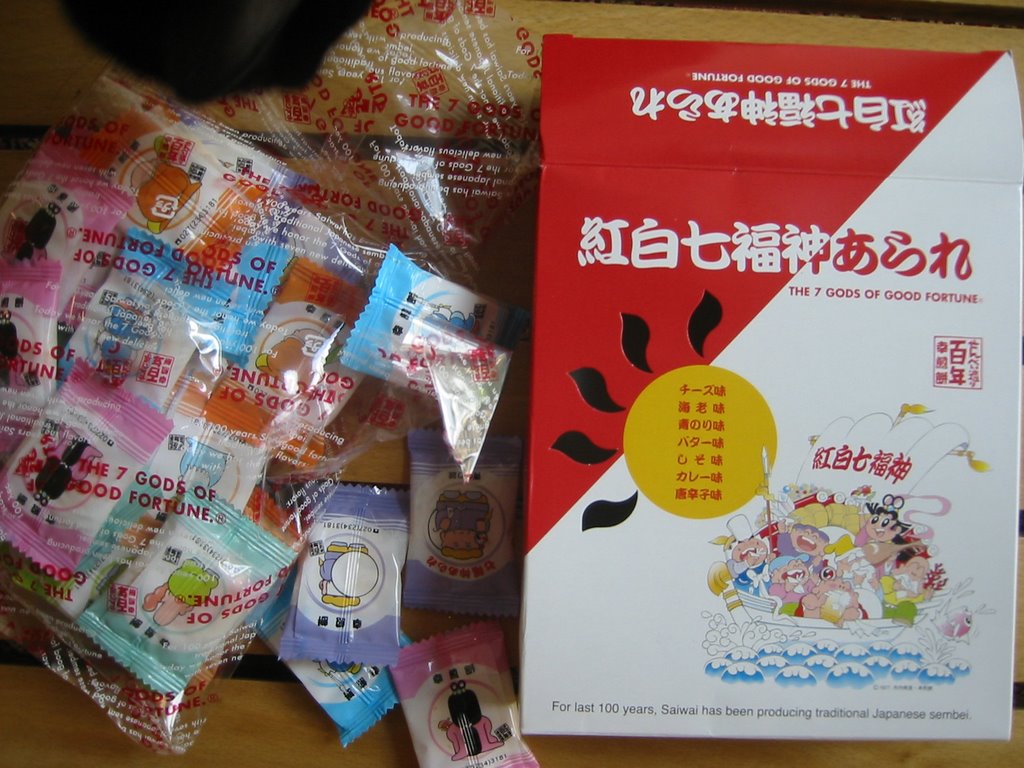
One of my students recently returned from her brother's wedding in Kyoto and brought me a box of Japanese sembei (a.k.a rice crackers). These particular sembei are called "The Seven Gods of Good Fortune," a name that works out to be a tad ungainly in English, but who cares! Each of the teeny, half-dollar size crackers is encased in its own special package, which gives them an unexpected distinction (kind of like carrying each of your pennies in its own separate coin purse). It also drastically slows down the feeding process for those of us used to opening boxes of loose crackers and scooping them to our mouths steamboat paddle-style.

And, surprise! This being a Japanese snackfood, the packaging also allow for an explosion of cute characters. Each package depicts one of the seven happy gods--both front view and rear view (if you flip over the cracker).

Corresponding to the little characters are seven flavors: butter, cheese, shrimp, seaweed, shiso, curry, and hot pepper. I had fun tasting and guessing. Some, like the butter and curry, were obvious from the first whiff. A few others, like the shiso and shrimp, were less recognizable to my Western palate, dulled by years of imbibing Lousiana Hot Sauce.

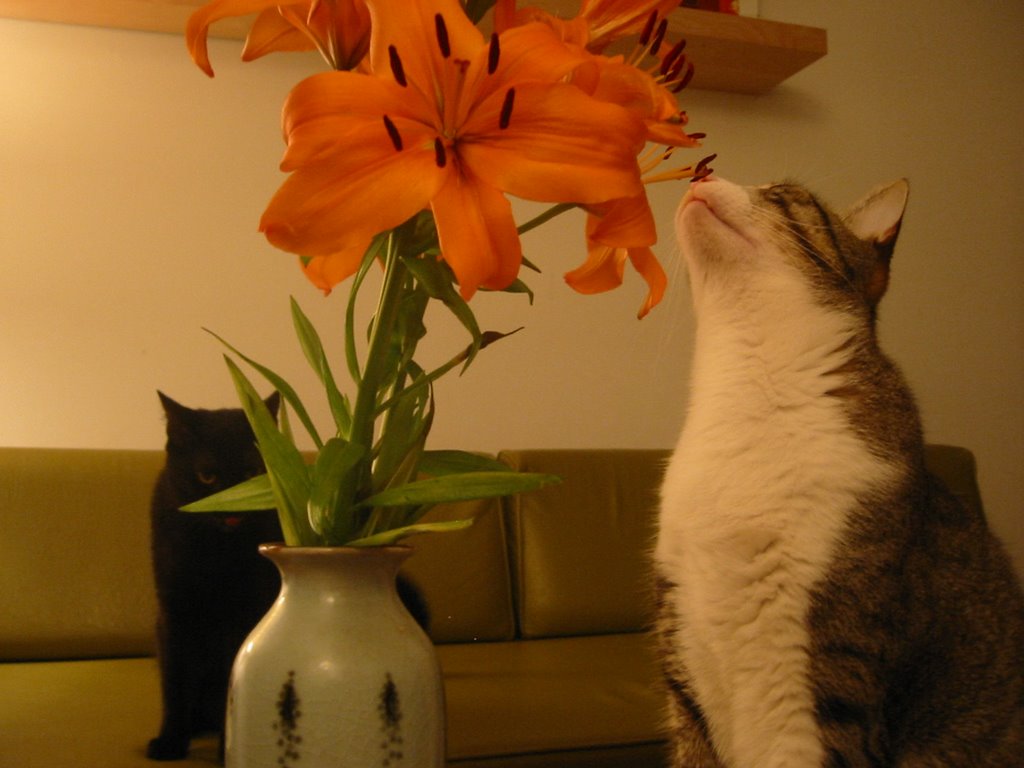
If ever the NYPD needs a butter-sniffing cat, Bunn will be their man. As I type this, he is nosing around at the open cracker box in search of the fragrant butter cracker, but also trying to see if he can squeeze the entire box over his head. That's his idea of heaven: a box of food blinding his vision while he stumbles around bumping into things. Sounds about right.


Hard at work with another investigation

Thursday, August 31, 2006

Parenting 101

Overheard tonight:

A young mother climbs on the bus, leading her toddler son by the hand. The little boy has a band-aid on his cheek.

Mother: Look at your face! It look like somebody socked the shit out of you!
Boy: It look like somebody sopped the shit out of me!
Mother: [laughs] No, baby. Not sopped—socked.
Boy: It look like somebody socked the shit out of me!
Mother: Watch your mouth.

Tuesday, August 29, 2006

From bison to String Theory and beyond

Warning: lost post ahead!


So I went to Fordham yesterday for a long day of orientations and introductions and meetings and preparation for the next few years of doctoral work, and I don’t know what else to say at the moment beyond the fact that I am just downright delighted with all I saw and heard. Of course I didn’t feel delighted while I was there. Frenzied with nervous energy is a more apt description. My resolve to be honest and direct about my feelings about grad school had amounted to me walking around the house all weekend muttering the phrase, “I feel nervous” at regular intervals. To rally my spirits on orientation day, I wore my red platform sandals (see earlier post). I had hoped to shock at least one tweed-wearing person, but not a soul was in tweed, corduroy or even a patched-elbowed blazer, though a few girls wore the requisite lit department whimsical earrings and poetess blouses. A few of the older kids (I mean, the more advanced PhD students) even sported tattoos and bleached blond hair. (Speaking of tattoos, did anyone read David Brooks's silly, irrelevant piece about tattoos in the Times this weekend? I guess there really isn’t anything else going on in the way of global news. Dumb globe.)

Focus, Jane.

The last time I visited Fordham had been at the height of the summer, when the leafy campus was a good ten degrees cooler than the surrounding area. Yesterday it was as foggy, cool and gray as the setting for a Bronte novel. At 8 am, I arrived at the appointed building and found the registration table, where I was given a large Fordham tote bag and a pile of handbooks. I helped myself to some Continental breakfast and proceeded to stand around awkwardly, pretending it was perfectly natural to be spearing grapes from a tiny plastic plate while wearing an oversized red tote bag. Luckily, I soon noticed a woman I sort of know from Hunter, and we hung together happily for the rest of the orientation, talking about Faulkner and school and life and how she secretly doesn’t care much for Jane Austen (“Make up your mind already, Elizabeth!”). She’s entering the program this year also and already knows her dissertation topic: Faulkner through the lens of quantum physics and string theory.

Quelle coincidence! That’s my topic, too!

Err, yeah.

After breakfast, the university president, Fr. McShane, spoke about the school’s history and threw in some juicy factoids about the campus and the surrounding neighborhood, which includes the real Little Italy and the Bronx Zoo. I’ll tell you one very cool piece of trivia, so grab a pen and give it a test run at your next cocktail party: In 1899 after the U.S. had wiped out most of the 50 million bison on the Great Plains, a crew from the Bronx Zoo put together a small herd at the zoo, which was later released into the wild to repopulate the species. Even today, many of the bison you see in western states are descendents of those original Bronx bison!


Fr. McShane then spoke eloquently about the meaning of a Jesuit education, which might be summed up as 1) academic rigor, 2) ethics in and outside the classroom, and 3) respect for the whole person. Not having started classes, I can’t yet attest to the rigor or the ethics, but I am thrilled with how the last factor has played out already. There have been courtesy and sympathy in even in the smallest interactions—from the many faculty members who have offered to answer any question I might have and actually mean it (I’ve already put them to the test) to one of the professors who spoke affectionately of his family and how much he enjoys spending his summers with them. I file away these little moments of humanity, especially after the bureaucracy of CUNY, where individuality amounted to a social security number and a pile of passwords. “Whole person?” I was just another whole person taking up space in an already- crowded elevator or a long line at the registrar’s office (and usually the wrong line, knowing Hunter's helpful, sensitive signage).

The last meeting of the day was the most useful, when the seven or eight of us new PhDs met with the graduate director and the director of job placement, who explained that we should view our graduate work as career preparation, pure and simple. I appreciated this. By this point, we all know books are awesome and reading them is great! We don’t need to sigh over the fate of Tess to remember why we’re here. What I did need to hear— and what I heard to my satisfaction—is that the program will do everything it can to urge (read: boot) me swiftly through the process of courses, comps, and dissertation and, most importantly, help me land a job at the end. Recently, they’ve had a 100 percent job placement rate! Along the way are conferences and research grants, faculty-student reading groups, and the reassuring fact that I’ll be getting a paycheck every two weeks.

So, I’m glad and nervous. The little voice demanding that I justify my decision to go to graduate school has been quieter than usual. He must have heard that I'm now in full possession of a tote-- and I’m prepared to use it.

Tuesday, August 22, 2006

Revenge of the day-old bread


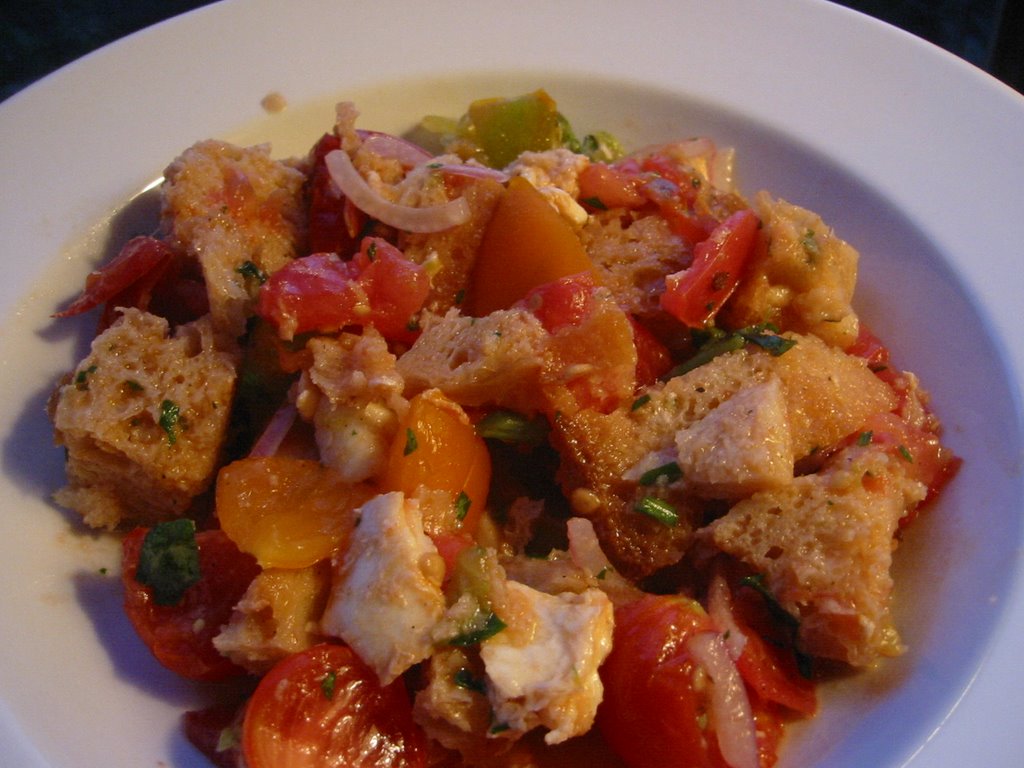
When I get the urge to make this summery salad, heaven help me if there’s no old bread handy. I'll hang around the kitchen, staring down at the poor fresh loaf until that precise moment when it is officially on its last legs and I can fall on it and begin tearing it limb from limb--or at least into casual one-inch cubes.

Panzanella is its mellifluous name (and a great name for a cartoon princess, don't you think?), though I prefer the more modest sonics of “Bread Salad.” We had it the other night with HA and V at Diner, a place in Brooklyn that I’d just like to step out and call my favorite restaurant in the city. Ha! Whenever I catch myself talking about my favorite things, I feel like my 10-year-old self again, compiling lists of favorite colors, practicing my signature, and resolving once and for all The Question of Which New Kid on the Block is, in Fact, The Cutest. A quick look at my profile will reveal that I haven’t exactly gotten over this tendency.

But, back to the salad. Yesterday morning I realized that there was half a crusty loaf of bread on the counter, so after teaching, I hauled myself down to the Union Square green market and shelled out way too much money on heirloom tomatoes—fine, if you must know, a shocking $10. Lined up like fat toddlers waiting to be adopted, they were impossible to resist, and I had fun selecting tomato after tomato--the more mishapen and odd the better.

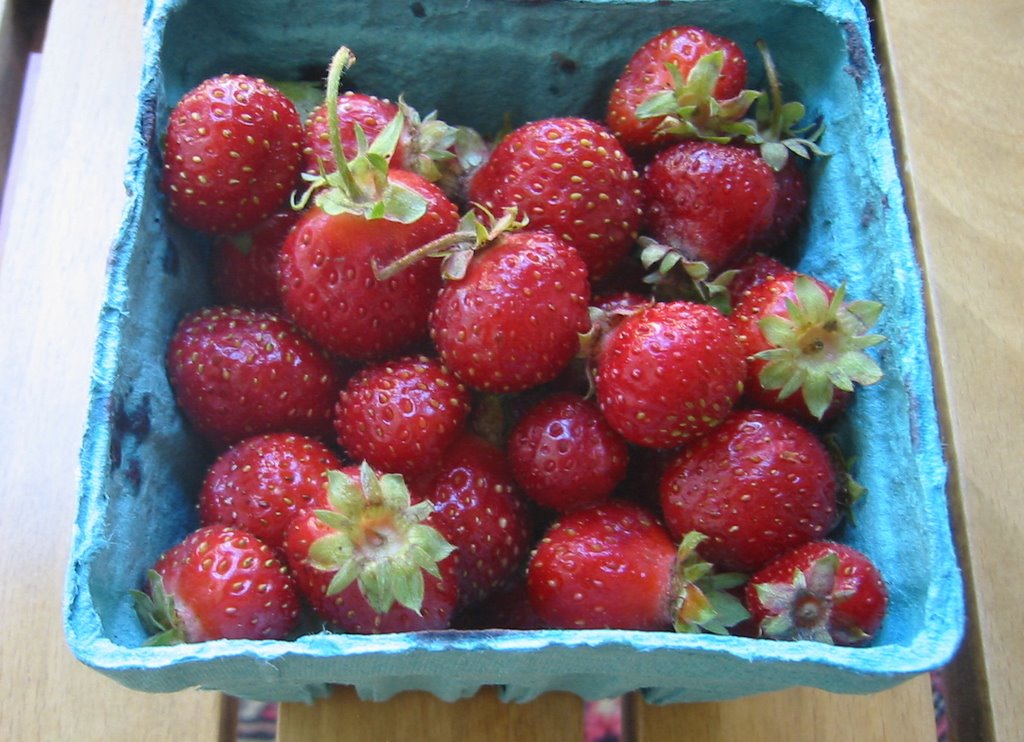
Back home, it took only a few minutes to throw together the salad. We ate it with white wine and miniature farm-fresh strawberries, the latter also purchased in Union Square but at another stand operated by a grim teenage farmer, who accepted my $3.00 skeptically, as if he wasn’t sure he trusted me with his produce. The strawberries look like the kind you see embroidered prettily with leaves and flowers on kitchen curtains, or the ones I remember fondly from this childhood book. Suffice it to say, a single teeny one had more flavor than a bucket of the ordinary kind. Without thinking, I happily exclaimed to Justin, "These strawberries are so small, they're practically the size of berries!" He turned away very slowly, perhaps wistfully thinking what it might be like to be married to a smart person.

Scroll down here for a basic recipe for Bread Salad, which you can adapt as you like. We threw in fresh mozzarella and extra sea salt. Other recipes call for capers, olives or bacon, but that sounded too complex; we wanted to keep it bright--like one of those long, mid-summer evenings.

Buon appetito!

Tuesday, August 15, 2006

In which Jane giddily introduces you to a new blog

Here, friends, is a clever music/recording blog that you should read regularly, even if (and perhaps especially if) you can't tell a ten-channel Yamaha or an Ampex MM1200 from a hole in your head. Studies have shown that ingesting such arcane commentary can build brain cells, forge new neural pathways, and add decades to your life (the equivalent of drinking a quart of wheatgrass and doing a hundred pushups daily).

So read it. Besides, it includes awesome photos of cats!

Aren't you dying now to know who the author is? How'd you like a little hint?

Drumroll, please...


Half the alphabet, no letters repeated, baby!!

You know it! What's up now?

Sunday, August 13, 2006

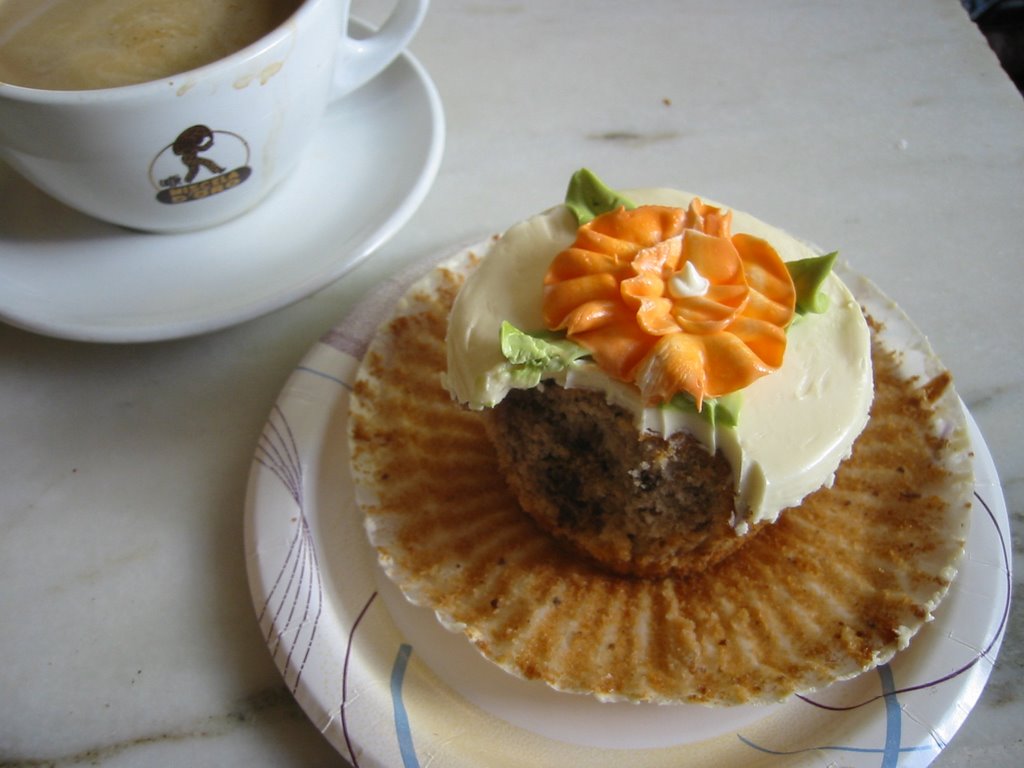
Cupcake or Muffin in Disguise? Whatever it is, it's good.

Cupcake Cafe
522 9th Ave


Jane: So you come here a lot, right, because you work in the neighborhood?
Justin: Well, you know this isn't the original Cupcake Cafe. The original one used to be down the street from my work, and this new one's two blocks up, so I don't come here as much.
Jane: Would you say that the cupcakes have changed?
Justin: No.
Jane: How would you describe the cupcakes here, because, to me this is no ordinary cupcake.
Justin: Well, it's not like one of those Magnolia types, topped with sugary frosting.
Jane: Light, spongy...
Justin: Yeah, it's definitely not the kind of cake that falls apart when you take a bite.
Jane: Well, let's talk about the cake first and then the frosting. To be honest, I think the cake, while delicious, is actually more like a muffin.
Justin: I disagree.
Jane: Don't you think it has the density of a muffin?
Justin: Think of a regular muffin. Muffins have a certain set of ingredients...
Jane: Well, it's not a very sweet cupcake, which I think is a point in its favor.
Justin: Right. It doesn't have to be sweet to be a cupcake.
Jane: But don't you think of cupcakes as sweeter and lighter than muffins? Do you want to redefine what a cupcake is?
Justin: No, I don't. I think this definitely qualifies as cake.
Jane: So, it's more about expanding the definition.
Justin:No, listen. This is a walnut cupcake, and so naturally it's a little heartier. You should try the chocolate and yellow cupcakes before making a final judgment.
Jane: No problem. Well, visually anyway, there's no doubt this beautiful thing is a cupcake. Let's talk about the frosting. This frosting is so buttery-- I wonder how much butter they use.
Justin: I'd say it's 90 percent butter.
Jane: Remarkably buttery...
Justin: A lot of people actually complain about that.
Jane: Really? Well, it is a little surprising just how buttery it is.
Justin: Yeah, the cupcakes are all refridgerated right up 'til they're sold, so the flower decorations don't melt.
Jane: So, would you say this is your perfect cupcake?
Justin: I don't know. Maybe the perfect cupcake should always remain elusive.
Jane: Either that, or it's any one that happens to be sitting in front of you.

Stay posted. In our next installment, Justin and Jane tackle the desserts at another NYC bakery.

Saturday, August 12, 2006

The People's Art


Russian artists Vitaly Komar and Alex Melamid polled Americans to find out exactly what we're looking for in a painting, and, apparently what we want is a dishwasher size landscape featuring a famous historical figure. Check out the resulting paintings from the United States and several other countries.

Komar and Melamid's snarky project is already ten years old, but I just discovered it this morning as a quick aside in Amy Hempel's novella Tumble Home. A poet friend recommended Hempel to me, saying, "Every one of her sentences makes me fall on the floor and weep." When I had finished laughing haughtily over what a great workout that must be, I tore out onto the street and made a flying leap for Barnes and Noble.

Friday, August 11, 2006